Relocation Costs
Relocation is one of the most financially consequential decisions a household makes, and it’s routinely undercosted at the planning stage. Most people focus on the cost of the moving truck and the destination housing price, when the full financial picture includes real estate transaction costs in both markets, the cost-of-living difference between origin and destination, state tax domicile changes, and the transition costs of establishing a new household in a new market.
Real estate transaction costs alone can be substantial. Selling a $2 million home carries approximately $100,000–$130,000 in agent commissions and closing costs. Buying a $1.5 million home in the destination market adds another $45,000–$75,000 in closing costs, mortgage origination, and transaction fees. Before a single box is packed, the transaction layer of a major relocation can cost $150,000–$200,000. Households relocating from high-cost markets where their home has appreciated significantly also face capital gains tax exposure on sale proceeds above the $250,000/$500,000 exclusion.
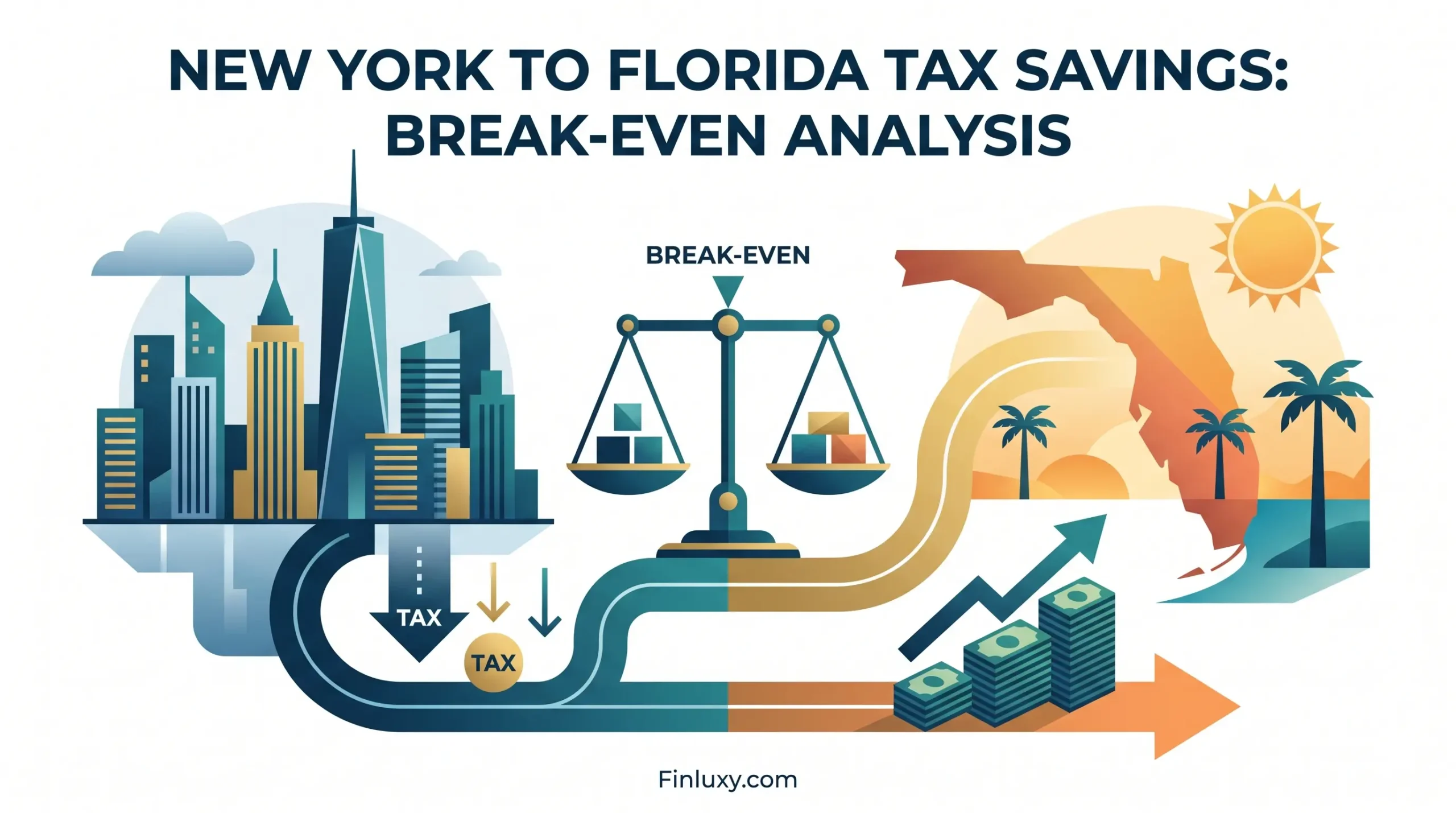
State tax domicile is the change that requires the most careful attention for high earners. Moving from a high-income-tax state — California (13.3% top rate), New York (10.9%), New Jersey (10.75%) — to a no-income-tax state — Florida, Texas, Nevada, Washington — can save six figures annually for high earners. But establishing domicile requires more than simply buying a home in the new state. Spending more than 183 days in the new state, updating driver’s license, voter registration, and banking relationships, and potentially withstanding an audit from the prior state’s tax authority are all part of the process.
For relocation driven by a job change or offer, the financial calculus is covered in job relocation, including how to evaluate employer relocation packages. The destination market cost comparison lives in city comparisons. The Real Estate pillar covers relocation alongside the full set of buying and selling costs.