Skip to content
Finluxy
Finluxy
  • Affluent Living
  • Income Reality
  • Life & Money
  • Luxury Spending
  • Real Estate
  • Smart Spending
  • Tax & Wealth

Card Rewards

Credit card rewards are one of the few areas of consumer finance where high spenders have a structural advantage. The value of rewards — points, miles, cash back — scales with spending, and the bonus category structures of premium cards are designed for exactly the spending patterns of high-income households. Done well, an optimized card strategy can return $10,000–$30,000 or more annually in travel, cash, or statement credits for households spending $200,000–$400,000 annually across cards.

The foundation of any rewards strategy is matching cards to spending categories. The American Express Platinum earns 5x points on flights booked directly and provides $1,400+ in annual credits (Uber Cash, airline fee credits, hotel credits, digital entertainment) that can offset most or all of its $695 annual fee for frequent travelers. The Chase Sapphire Reserve earns 3x on travel and dining with a $300 travel credit, making its effective fee $250 after the credit. The Capital One Venture X earns 2x on everything with a $300 travel credit and unlimited Priority Pass lounge access. For business spending, the Amex Business Platinum and Chase Ink cards layer on additional category bonuses.

Points valuation is where most people’s strategy breaks down. A Chase Ultimate Rewards point is worth approximately 1–2 cents when redeemed for travel through the portal, but 2–3 cents when transferred to airline or hotel partners and redeemed for premium cabin awards. An Amex Membership Rewards point follows a similar transfer-and-redeem logic. Cash back cards eliminate the valuation complexity at the cost of ceiling value. Understanding which redemption path applies to your actual travel patterns determines whether a points strategy is worth the management overhead.

Card rewards strategy interacts directly with spending analysis across the categories in the Smart Spending pillar. For high-end travel redemptions, the context lives in luxury travel. For evaluating whether premium card annual fees justify their cost, the worth it? framework applies directly.
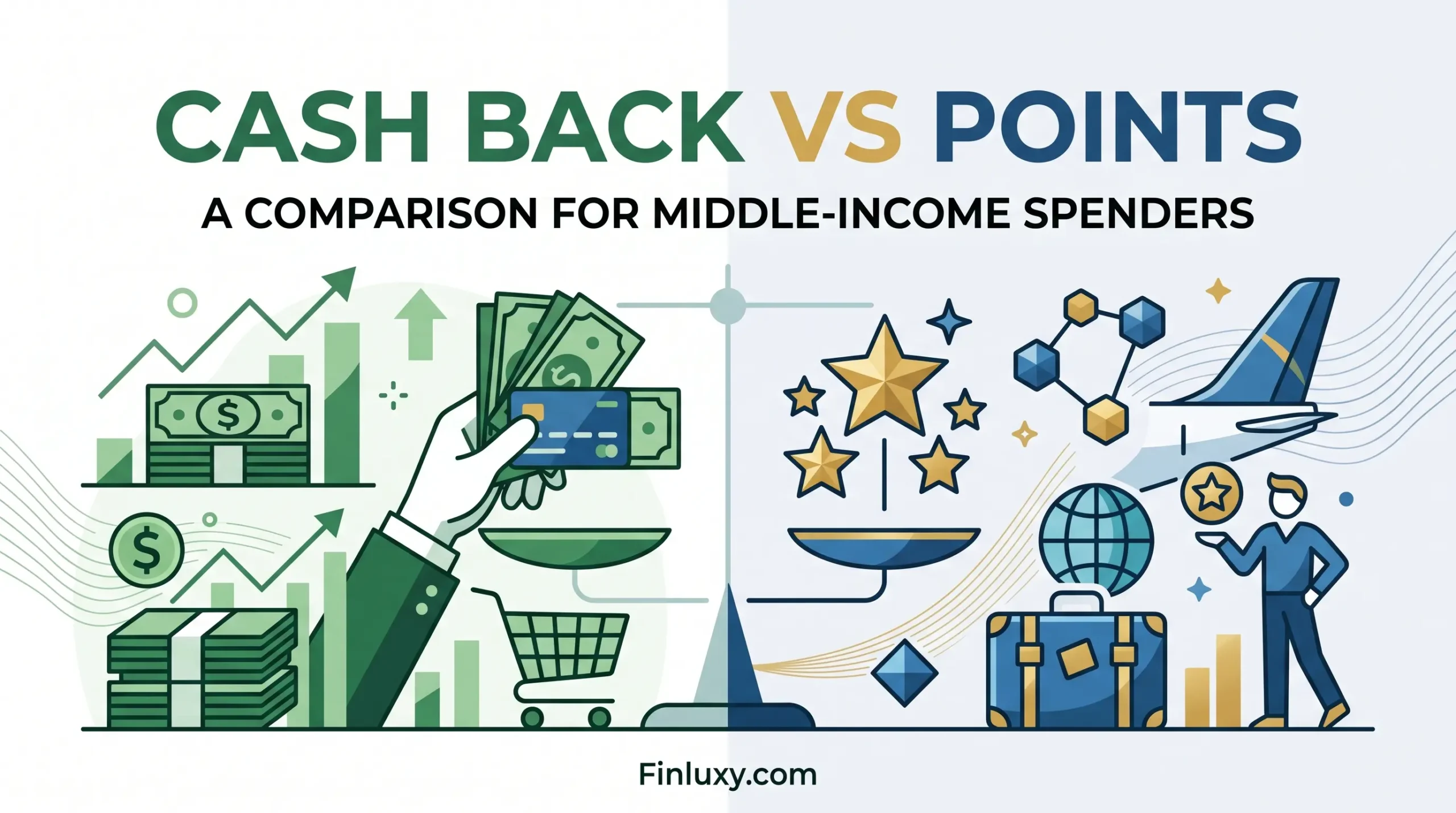

A geometric vector illustration comparing cash back rewards, symbolized by money and graphs, against travel points, represented by stars, luggage, and a plane.

Cash Back vs Points for Middle-Income Spenders

A geometric illustration showing a credit card welcome bonus passing through a calculator and spending elements to determine true value, with Finluxy.com below.

Welcome Bonus Math: True Value After Spend

Geometric vector illustration of a scale balancing travel rewards and a credit card against coins, representing net value.

Capital One Venture X Annual Fee: Net Value Math

Geometric vector illustration showing several premium credit cards with travel and cashback icons, suitable for high household spending, for Finluxy.com.

Best Credit Cards for $80k–$130k Household Spending

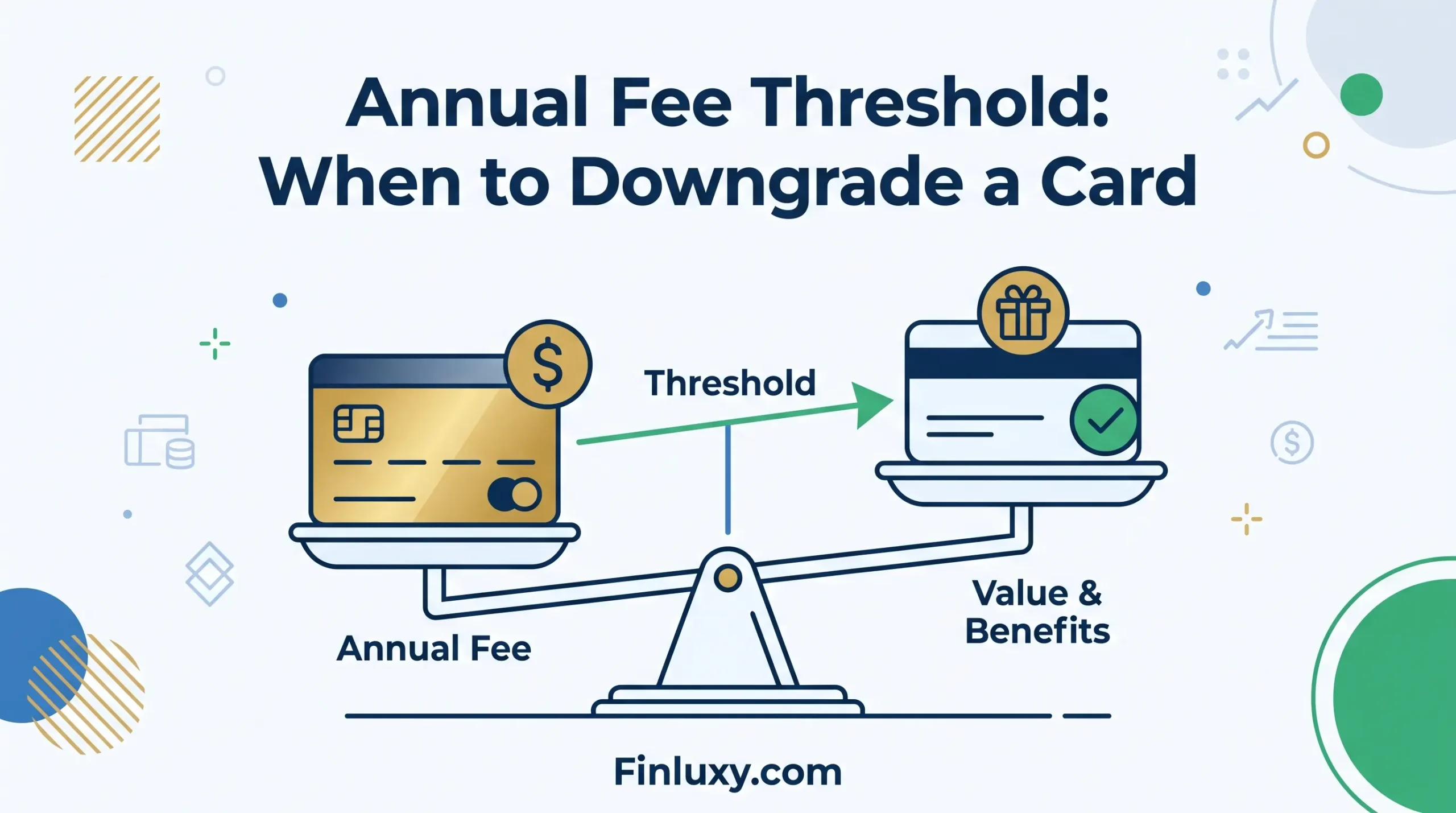
A vector illustration with a scale comparing 'Annual Fee' on one side with 'Value & Benefits' on the other.

Annual Fee Threshold: When to Downgrade a Card

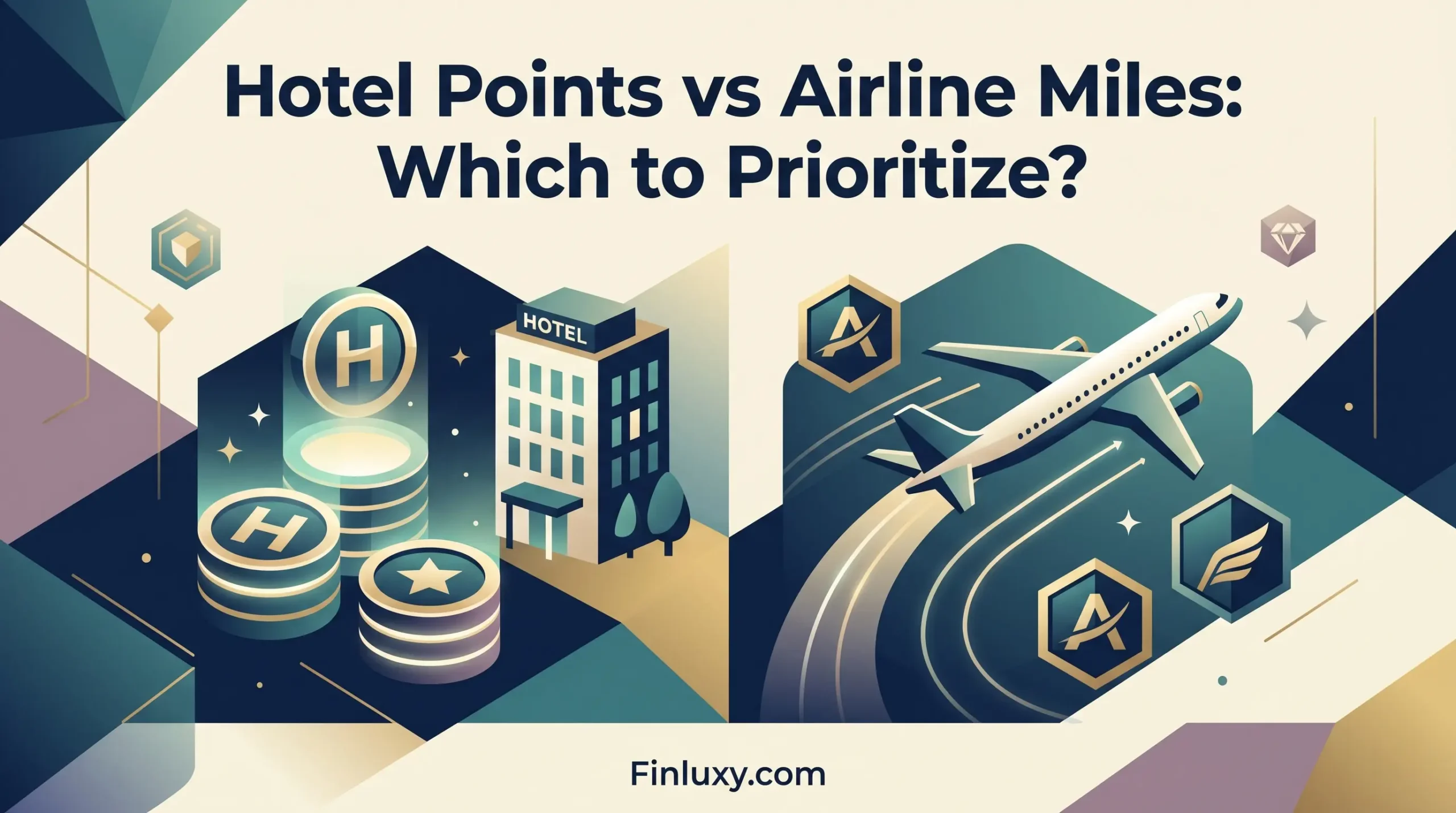
Vector illustration comparing a hotel with point coins to an airplane with mileage tokens, titled Hotel Points vs Airline Miles.

Hotel Points vs Airline Miles: Which to Prioritize?

Geometric vector illustration of premium credit cards fanned out below the headline "Best Cards for $150k+ Household Spending".

Best Cards for $150k+ Household Spending

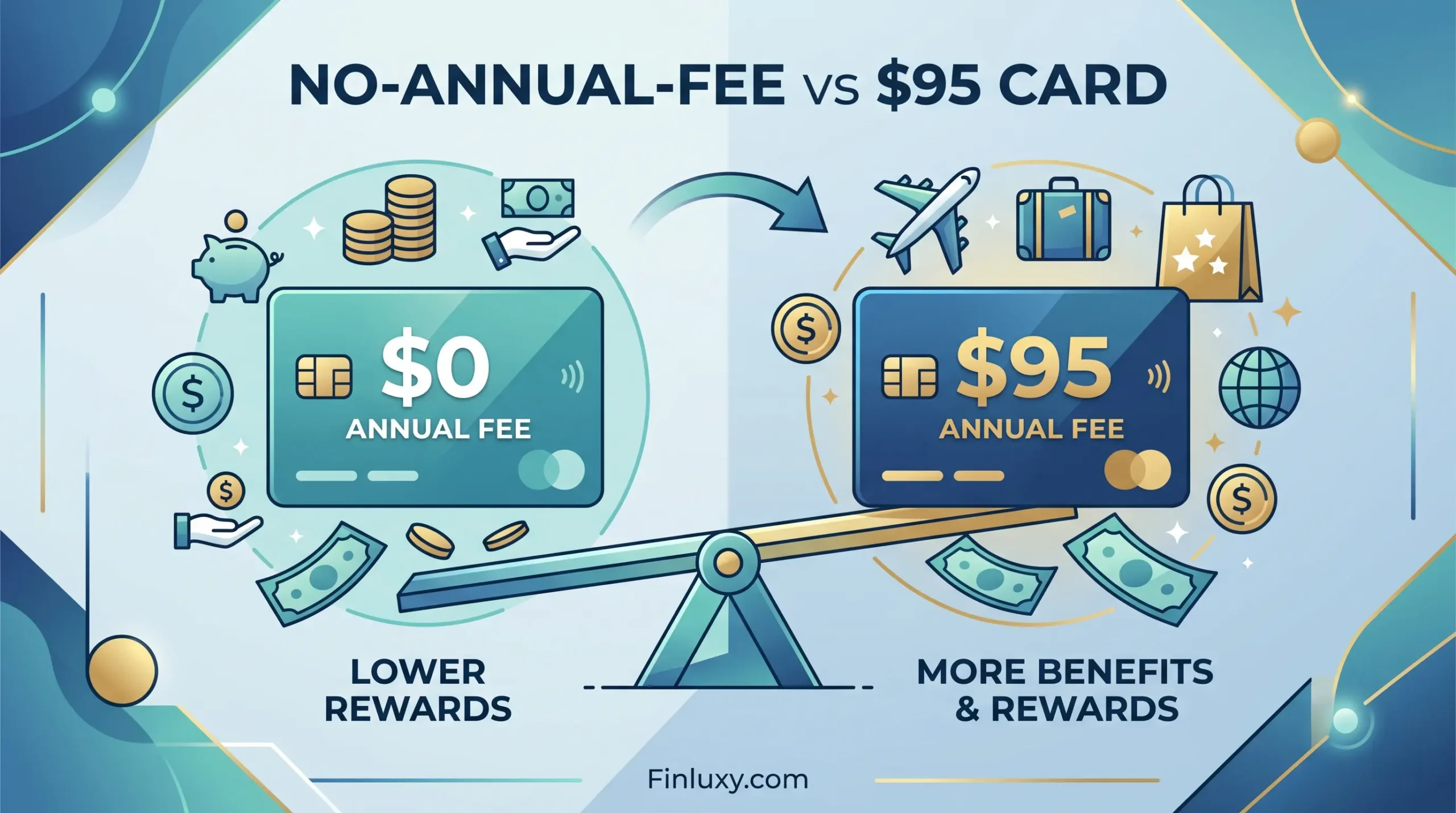
Minimal geometric illustration comparing a no-annual-fee credit card and a premium fee card balancing on a scale.

No-Annual-Fee vs $95 Fee Card: When the Math Flips

A modern geometric vector illustration illustrating a credit card rewards transfer strategy to maximize value for travel and gifts, with the headline "TRANSFER PARTNER STRATEGY: HOW TO GET 2+ CPP" at the top and the website "Finluxy.com" at the bottom.

Transfer Partner Strategy: How to Get 2+ CPP

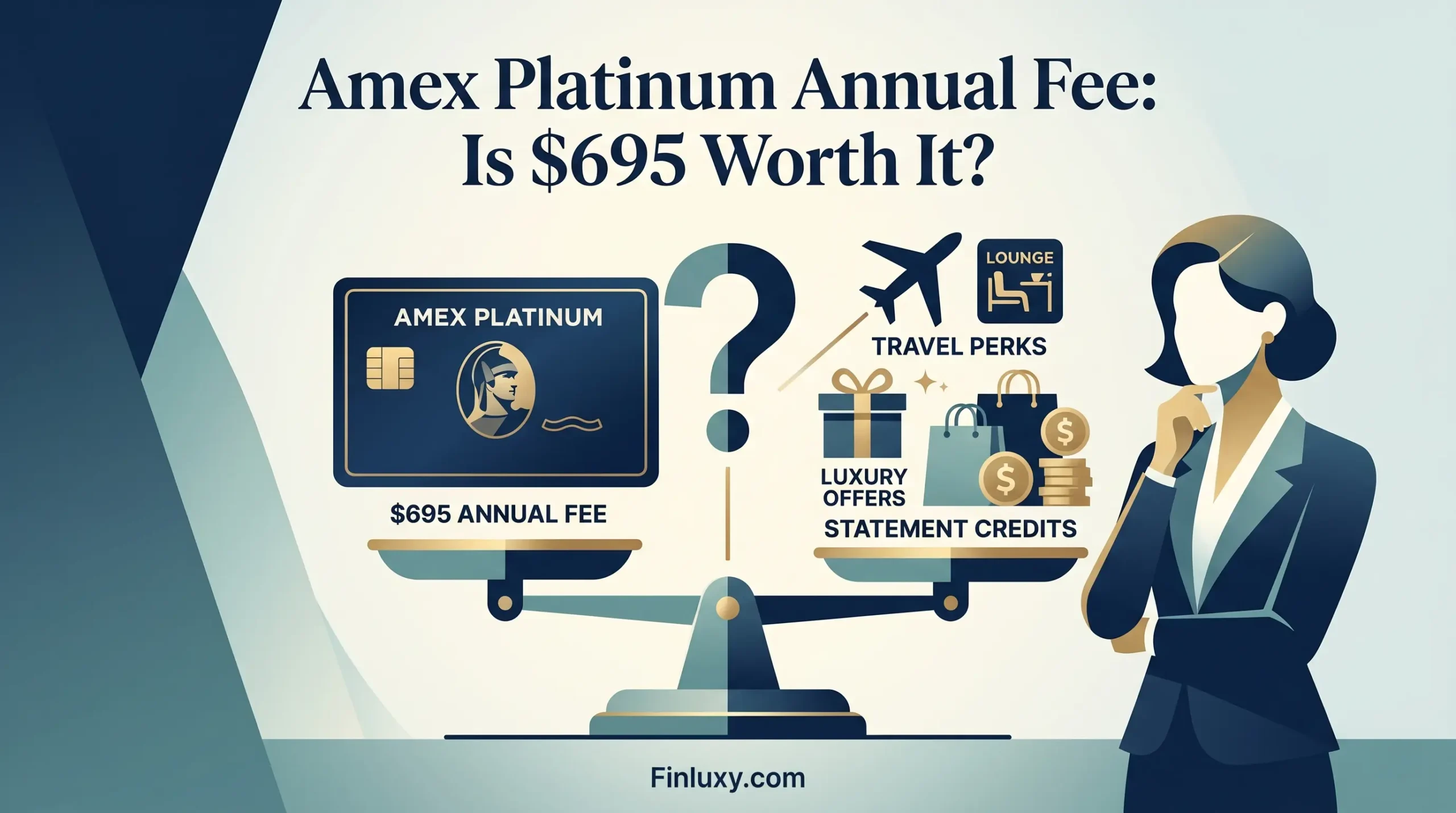
Geometric vector illustration weighing an Amex Platinum card against travel perks, with a woman thinking beneath the headline "Amex Platinum Annual Fee: Is $695 Worth It?"

Amex Platinum Annual Fee: Is $695 Worth It?

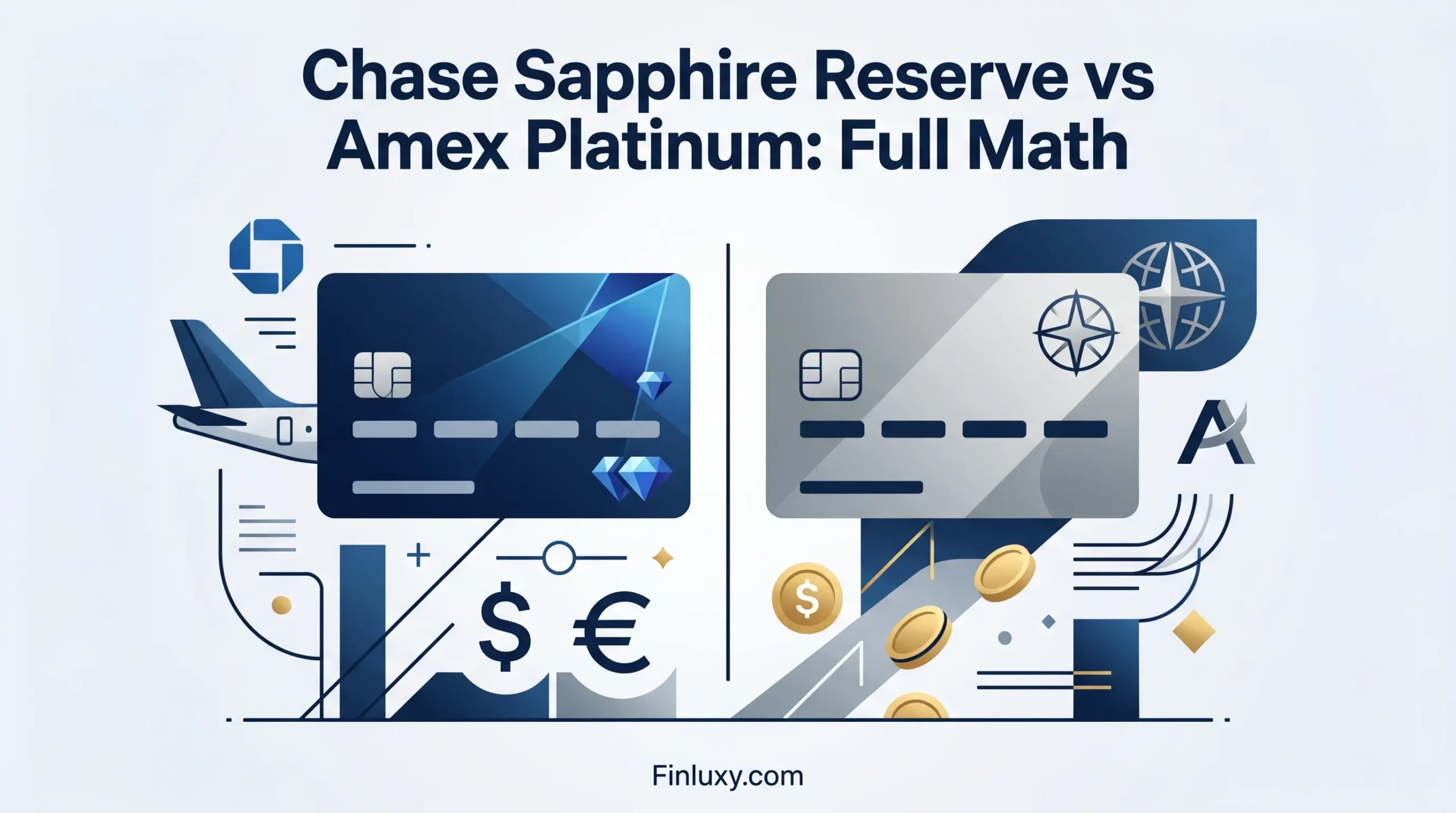
Minimalist vector graphic comparing a dark blue and a silver credit card side-by-side with abstract geometric travel elements.

Chase Sapphire Reserve vs Amex Platinum: Full Math

Geometric illustration of a man reviewing credit card perks with a gauge showing different spending categories and floating icons.

Credit Card Credits: How Much Do You Actually Use?

Abstract geometric illustration comparing Chase Ultimate Rewards and Amex MR using premium reward and travel icons.

Chase Ultimate Rewards vs Amex MR: Which Is Better?

Geometric vector illustration visualizing American Express points value analysis, with charts, coins, and 'Finluxy.com' at bottom.

How to Value Amex Points: CPP Data

A geometric vector illustration shows a credit card, growth arrows, and icons like gifts and airplanes, symbolizing business card rewards.

Card Rewards on Business Spending: Max Return

Minimalist geometric vector illustration of a sleek black credit card surrounded by premium reward icons, with the headline "Premium Credit Card Rewards Guide."

Premium Credit Card Rewards Guide

  • About
  • Privacy Policy
  • Editorial Policy
  • Disclaimer
  • Affiliate Disclosure
  • Terms of Use
  • Contact
© 2026 Finluxy. All Rights Reserved.