Tipping Guide
Tipping has become more complicated in the past decade — not because the underlying etiquette has changed dramatically, but because the contexts in which tipping is expected have multiplied significantly. Tablet payment prompts at coffee counters, QR code tipping at food trucks, and service charges automatically added to restaurant bills have created genuine uncertainty about what’s expected, what’s appropriate, and when declining to add a gratuity is socially acceptable rather than rude.
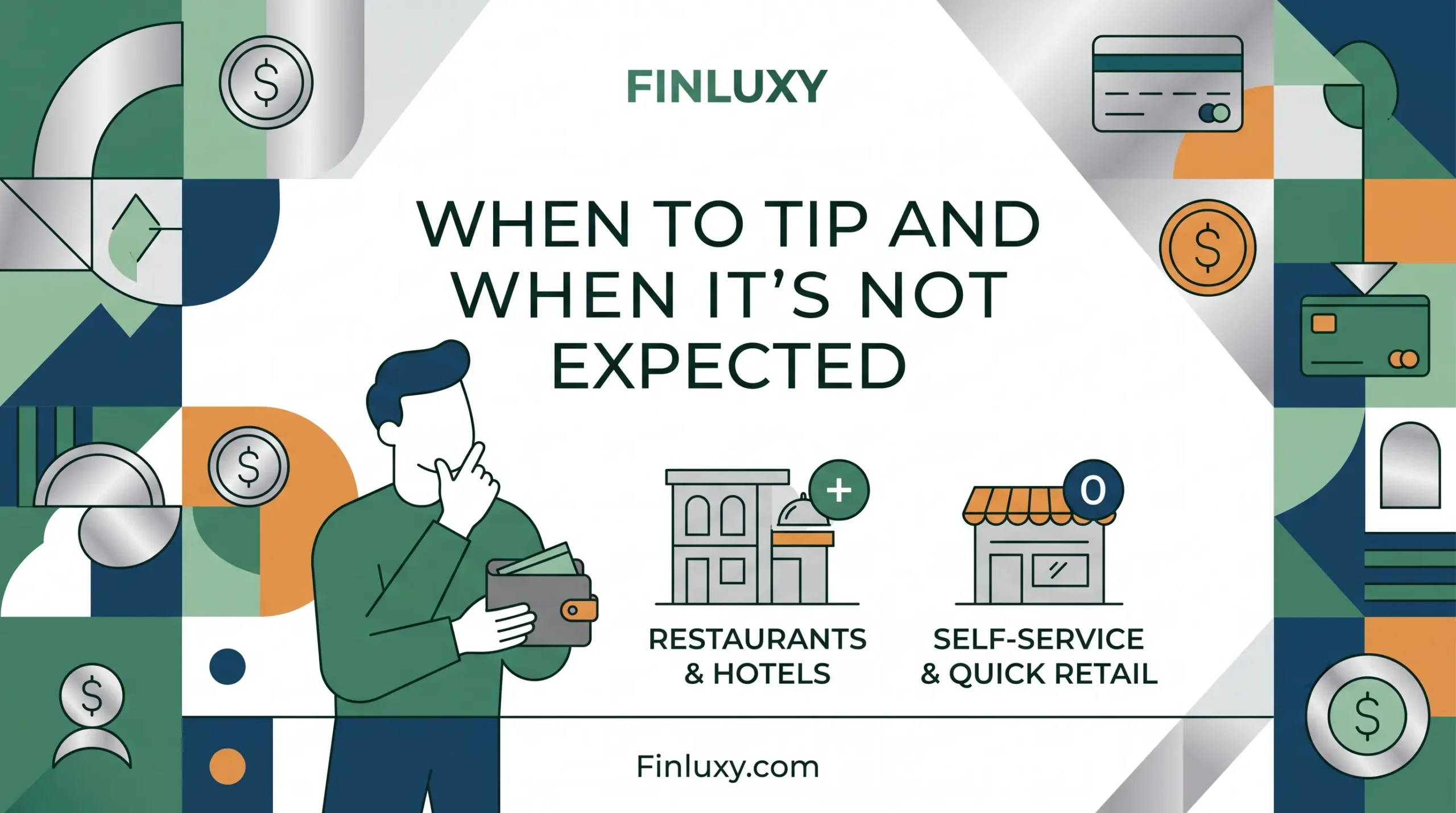
Restaurants remain the context with the clearest norms. Sit-down restaurants where table service is provided: 18–20% is now the floor in most markets; 22–25% is appropriate for excellent service, particularly at high-end establishments where servers carry meaningful wine and culinary knowledge. Many fine dining restaurants now add a service charge of 18–22% automatically, in which case an additional tip is not expected but a small additional amount for exceptional service is always appropriate. For counter service and fast casual — where the prompt appears but the service model is the same as fast food — tipping is optional and not socially expected if you decline.
Hotel staff represent one of the most undertipped categories. Housekeeping: $5–$10 per night is appropriate, left daily (not at checkout, since the crew may change). Bellhop: $2–$5 per bag. Concierge who secures a difficult reservation or provides meaningful assistance: $20–$50 depending on the effort involved. Valet: $5–$10 when retrieving your car. At luxury properties, where guests are typically high earners and staff wages may reflect that, tipping at the higher end of these ranges is appropriate.
Household staff who are employed directly require annual holiday gratuities rather than per-service tips. The standard is one week to one month’s pay depending on tenure and relationship, given in December. This intersects with what’s covered in household staff for the full picture of household employment costs. The Smart Spending pillar covers tipping as part of a broader guide to navigating discretionary spending with clarity.