Skip to content
Finluxy
Finluxy
  • Affluent Living
  • Income Reality
  • Life & Money
  • Luxury Spending
  • Real Estate
  • Smart Spending
  • Tax & Wealth

Dual Income

Dual-income households are the financial norm for most high-earning couples — and they’re structured differently enough from single-income households that many of the standard personal finance frameworks need adjustment to apply accurately. The tax treatment is different, the childcare cost is a direct function of both incomes working, the retirement savings capacity is different, and the financial resilience (and fragility) profile is its own distinct shape.

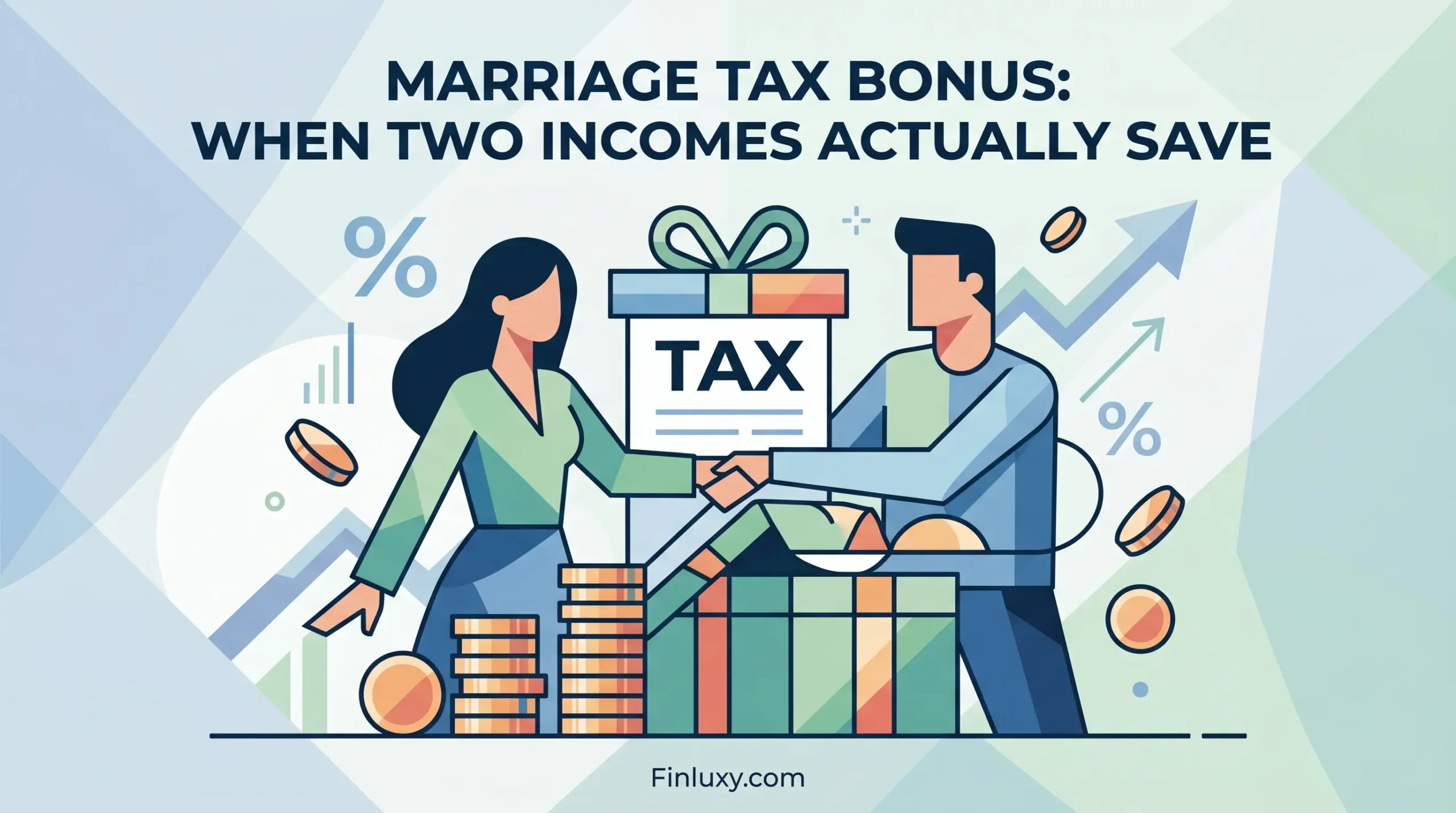
The marriage penalty affects dual high-income earners most acutely. When two individuals each earning $300,000 marry and file jointly, their combined $600,000 income is taxed at the same brackets as a single person earning $600,000 — which pushes more income into higher brackets than if they were single filers. The standard deduction doubles, which helps modestly, but for couples in the 32–37% bracket with similar incomes, the marriage penalty is real and can amount to $5,000–$20,000 in additional annual tax. Only one filing status (married filing separately) avoids the penalty, but it forfeits enough other deductions to rarely be worth it mathematically.

The second income’s net contribution is the calculation most dual-income households haven’t done carefully. If Partner B earns $120,000 and the marginal tax rate on that income is 42% (federal + state), the after-tax contribution is $69,600. Subtract full-time childcare costs ($40,000–$80,000 annually for young children) and any incremental commuting and work-related costs, and the net financial contribution of the second income may be $0–$30,000 per year. This doesn’t mean the second income isn’t worth it — career continuity, professional identity, retirement savings in a second 401(k), and the optionality of two income streams all have value — but the pure net dollar calculation is often more modest than expected.

For the childcare cost analysis that underlies this calculation, see childcare. For how dual income affects take-home pay in specific scenarios, see take-home pay. The Income Reality pillar covers dual-income dynamics alongside the other structural questions that determine what household income actually produces.
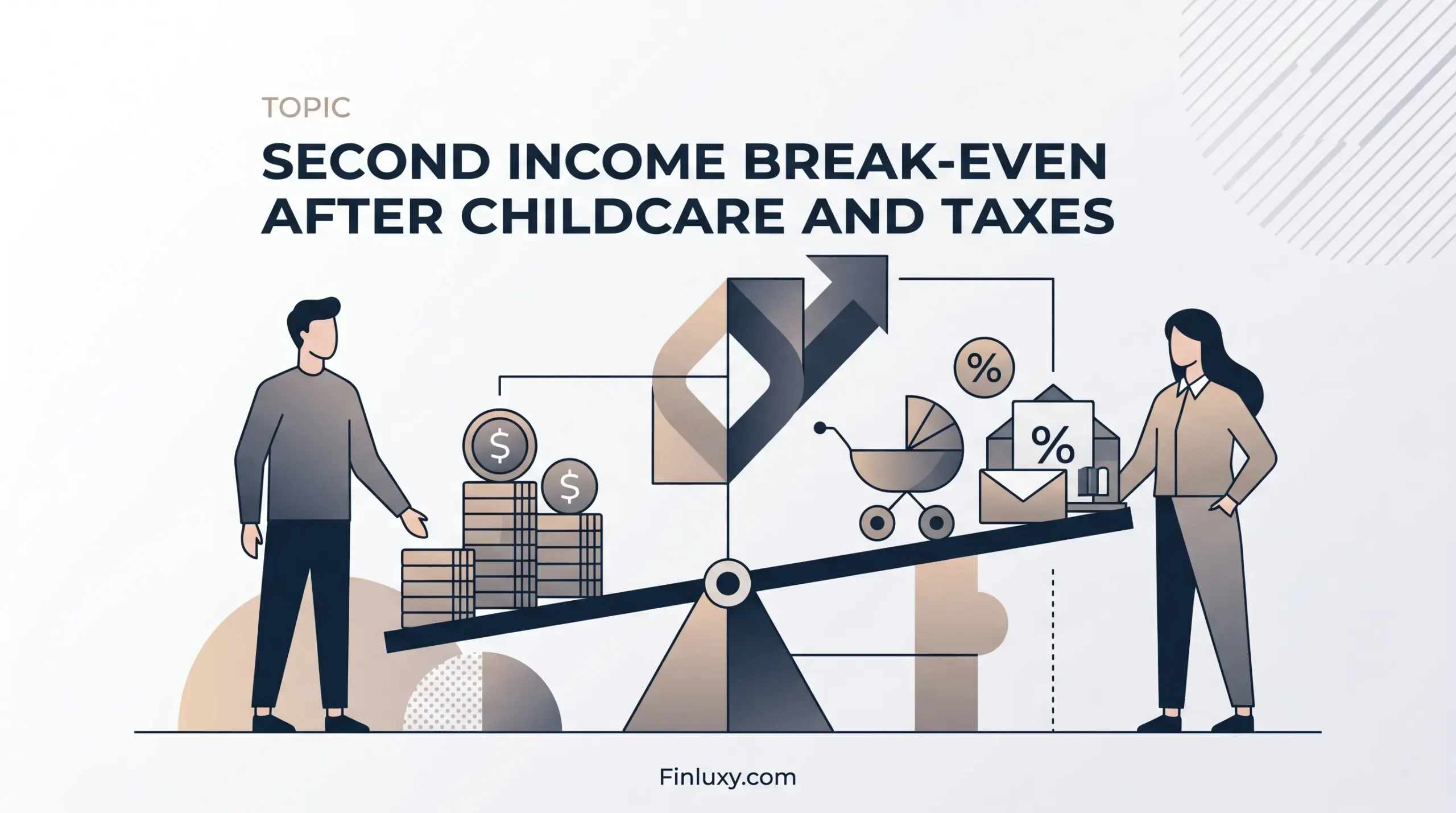
Geometric vector illustration of a balance scale weighing income coins against a stroller and tax symbols, titled for Finluxy.com.

Second Income Break-Even After Childcare and Taxes

Geometric illustration of a couple shaking hands with tax documents, coins, and 'Finluxy.com' footer.

Marriage Tax Bonus: When Two Incomes Actually Save

Geometric vector illustration of a couple managing dual incomes, featuring the headline "$200k Plus $100k Dual Income: True Net Household Pay" and Finluxy.com.

$200k Plus $100k Dual Income: True Net Household Pay

Geometric vector illustration of a couple beside growing wealth blocks and a tax calculation symbol.

Dual Income $500k Household: Tax and Wealth Math

Geometric vector illustration of a couple with a stack of papers, illustrating the marriage tax penalty.

Marriage Tax Penalty at $150k Plus $150k Income

Geometric vector illustration of a person deciding between a career path and parenthood path, with the Finluxy headline above.

Stay-at-Home Parent: True Financial Cost of Leaving Work

A geometric illustration of two faceless figures standing on converging paths with a stylized financial element between them.

Marriage Tax Penalty at $90k Plus $90k Income

A stylized geometric illustration depicting a couple with an unequal distribution of wealth, for Finluxy.com.

Income Asymmetry in Marriage: Financial Implications

Abstract geometric illustration showing two separate income streams merging into one net household total, branded with Finluxy.com.

$80k Plus $80k Dual Income: True Net Household Pay

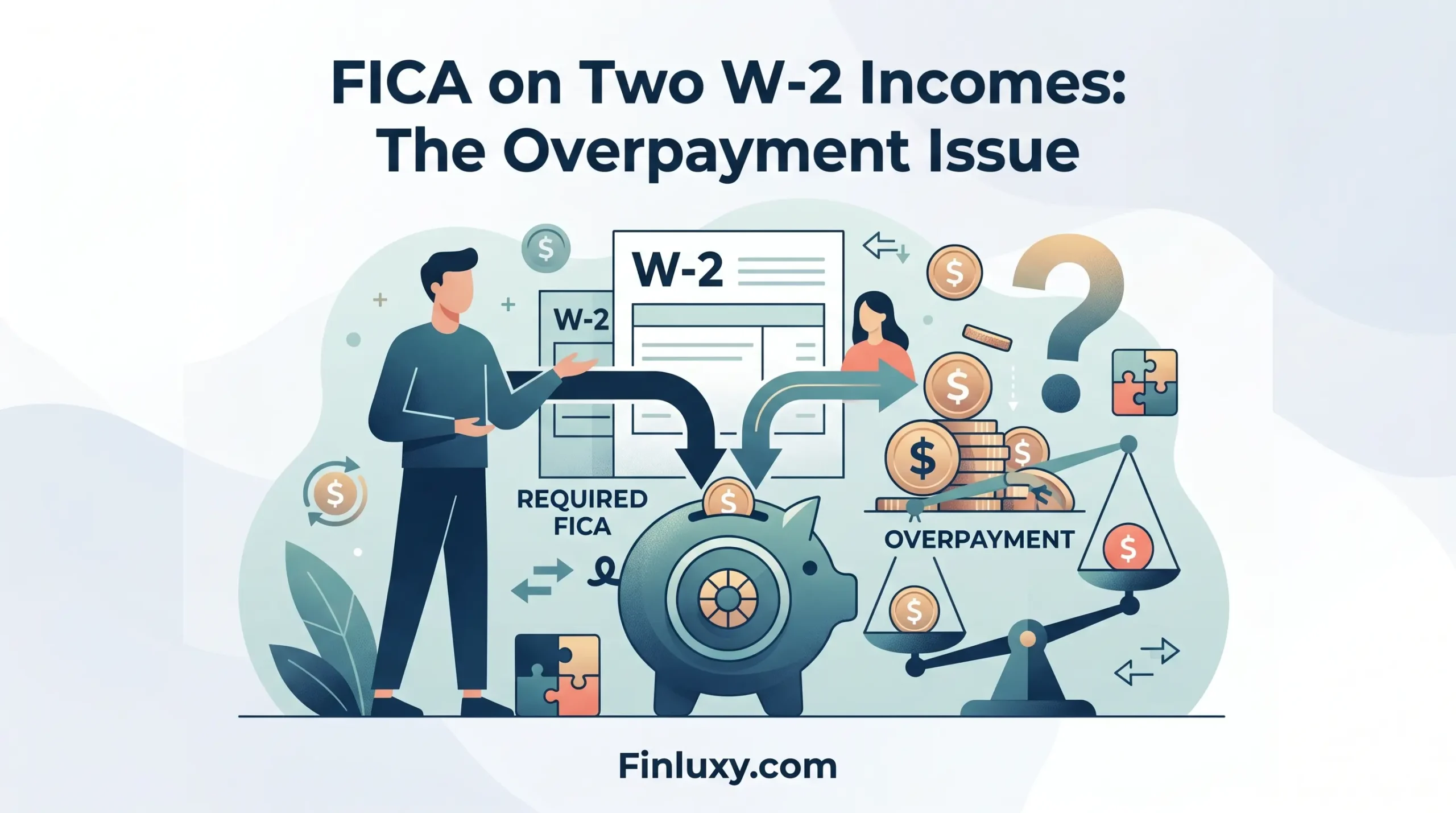
Geometric illustration showing a person next to two W-2 forms, arrows pointing to a piggy bank and an overpayment scale.

FICA on Two W-2 Incomes: The Overpayment Issue

A vector illustration for a finance guide showing a couple planning with growth symbols and a key.

Dual Income Household Guide for $150k+ Earners

Geometric vector illustration of a couple sitting at a table managing shared household expenses, with the headline "Dual Income Budget".

Dual Income Budget: Who Pays What and How to Split

Geometric illustration comparing a dual-income couple to a single high-earner using a balance scale.

Dual $100k Household vs Single $150k: Net Difference

Geometric illustration of a balanced scale comparing a worker's income against childcare costs at home.

Second Income Break-Even at $70k Salary After Childcare

Geometric vector illustration of a scale balancing family and work elements, featuring the headline "Part-Time Work After Kids: Net Income Math."

Part-Time Work After Kids: Net Income Math

  • About
  • Privacy Policy
  • Editorial Policy
  • Disclaimer
  • Affiliate Disclosure
  • Terms of Use
  • Contact
© 2026 Finluxy. All Rights Reserved.