Skip to content
Finluxy
Finluxy
  • Affluent Living
  • Income Reality
  • Life & Money
  • Luxury Spending
  • Real Estate
  • Smart Spending
  • Tax & Wealth

Buy vs. Lease

The buy vs. lease decision is one of the most mathematically rich and emotionally charged in consumer finance. Most people make it based on the monthly payment comparison — which is the least informative way to evaluate it. The payment comparison obscures the true cost difference, ignores flexibility value, and misses the tax implications that apply in certain ownership structures. A structured comparison looks at total cost over a realistic time horizon, residual risk, and how well each option fits the holder’s actual usage patterns.

Leasing has a simple underlying structure: you pay for the depreciation that occurs during your use of the asset, plus financing charges on the full value. A vehicle worth $80,000 that’s projected to be worth $48,000 at lease end represents $32,000 in depreciation over three years — that’s what the lease payment is recovering, plus the money factor (the lease equivalent of an interest rate). If you plan to hold the vehicle for three years and then move on, leasing avoids the residual value risk (the uncertainty about what the car actually sells for at the end) and provides clean exit flexibility.

Buying makes more financial sense when you plan to hold the asset well past the loan payoff, when the asset has strong residual value (certain Porsche models, pickup trucks, and select SUVs), or when you drive more miles than standard lease mileage allowances (typically 10,000–15,000 per year). Excess mileage charges of $0.15–$0.30 per mile can convert a favorably priced lease into an expensive one when the vehicle is returned.

For business owners, the tax treatment of leased versus purchased vehicles differs meaningfully — lease payments may be partially deductible as business expenses, while purchased vehicles are subject to Section 179 expensing limits and bonus depreciation rules that vary by vehicle weight and business use percentage. That dimension is covered in business taxes. The specific depreciation curve that underlies every lease payment is detailed in car depreciation. The Smart Spending pillar covers buy vs. lease as part of the broader framework for evaluating major financial decisions.
Geometric vector illustration comparing the financial options to buy or lease a Tesla Model 3.

Tesla Model 3 Buy vs Lease: Full Math

Geometric illustration comparing buying versus leasing business vehicles, with a central focus on the Section 179 tax impact.

Business Vehicle Lease vs Buy: Section 179 Impact

Geometric vector illustration of a modern car alongside stacked cash and a percentage key, explaining lease math.

Lease Money Factor Explained: How to Read the Math

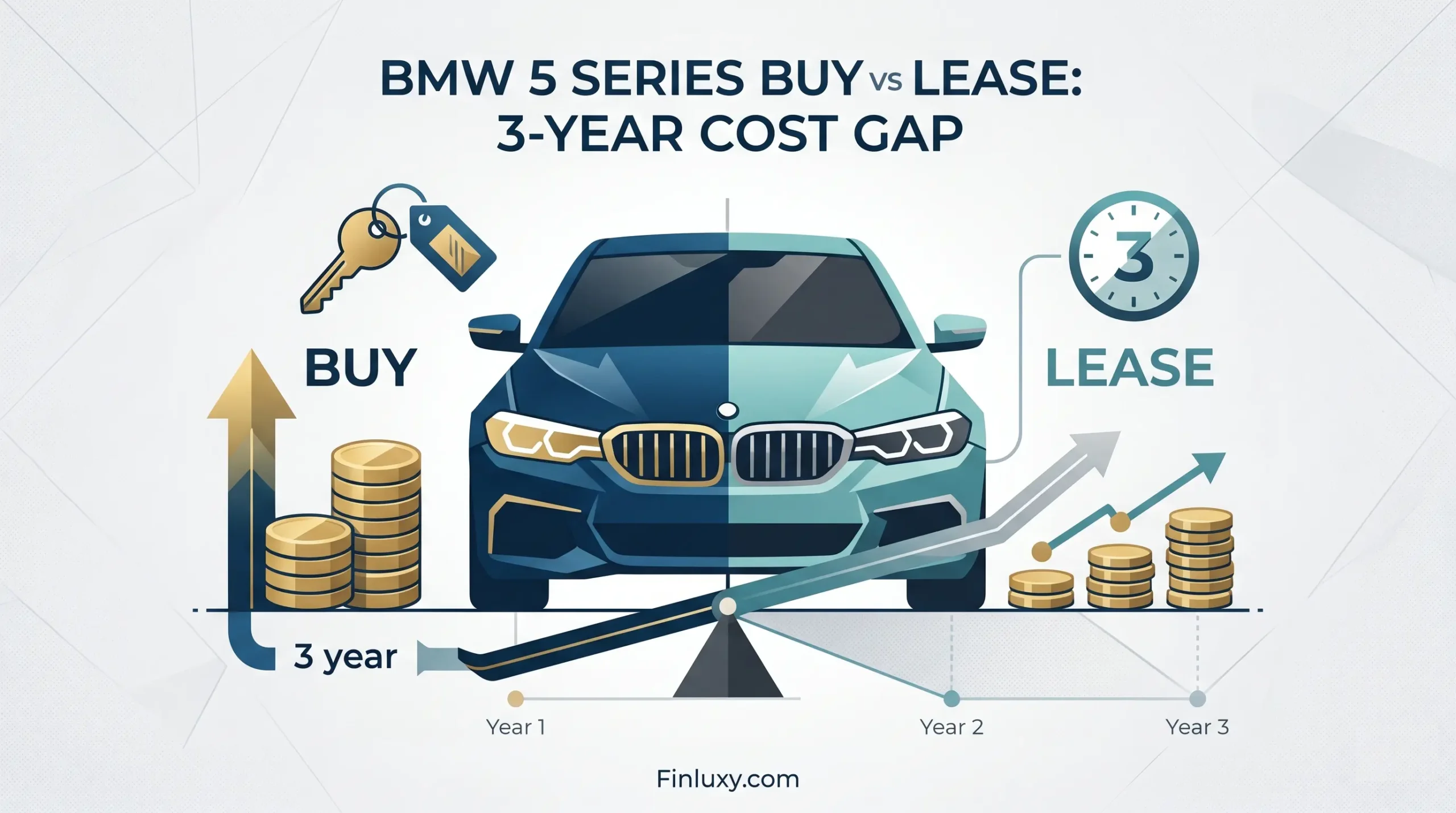
Geometric vector illustration comparing car buying and leasing costs for a BMW 5 Series, featuring the website Finluxy.com at the bottom.

BMW 5 Series Buy vs Lease: 3-Year Cost Gap

Geometric illustration comparing buying a luxury sports car in a garage versus leasing a premium SUV on a road.

Buy vs Lease Guide for $150k+ Buyers

Minimalist geometric illustration of a modern car alongside subtle financial icons, representing luxury vehicle leasing decisions.

When Leasing a Luxury Car Is the Smarter Choice

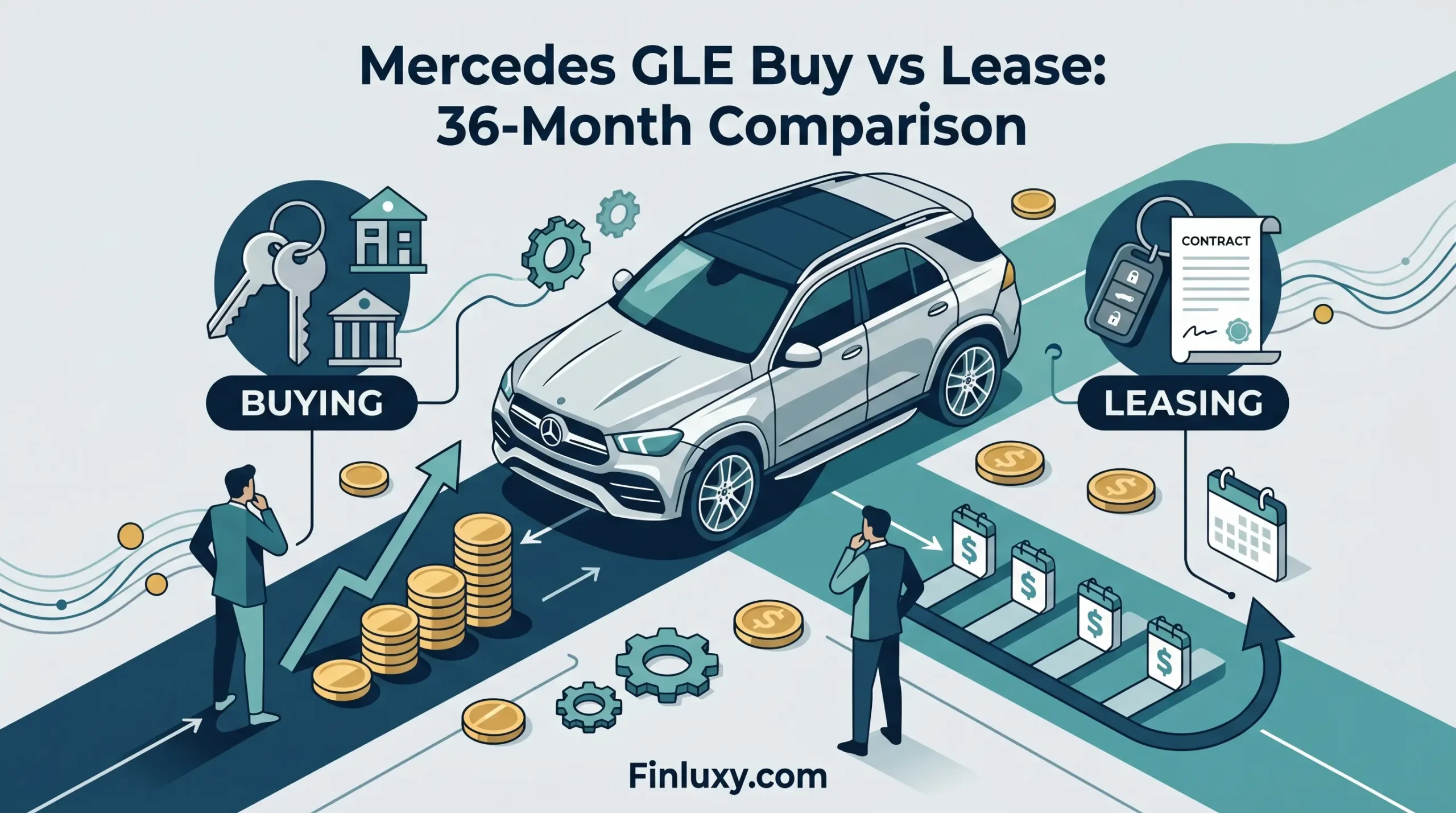
An isometric illustration contrasting the financial paths of buying and leasing a Mercedes GLE.

Mercedes GLE Buy vs Lease: 36-Month Comparison

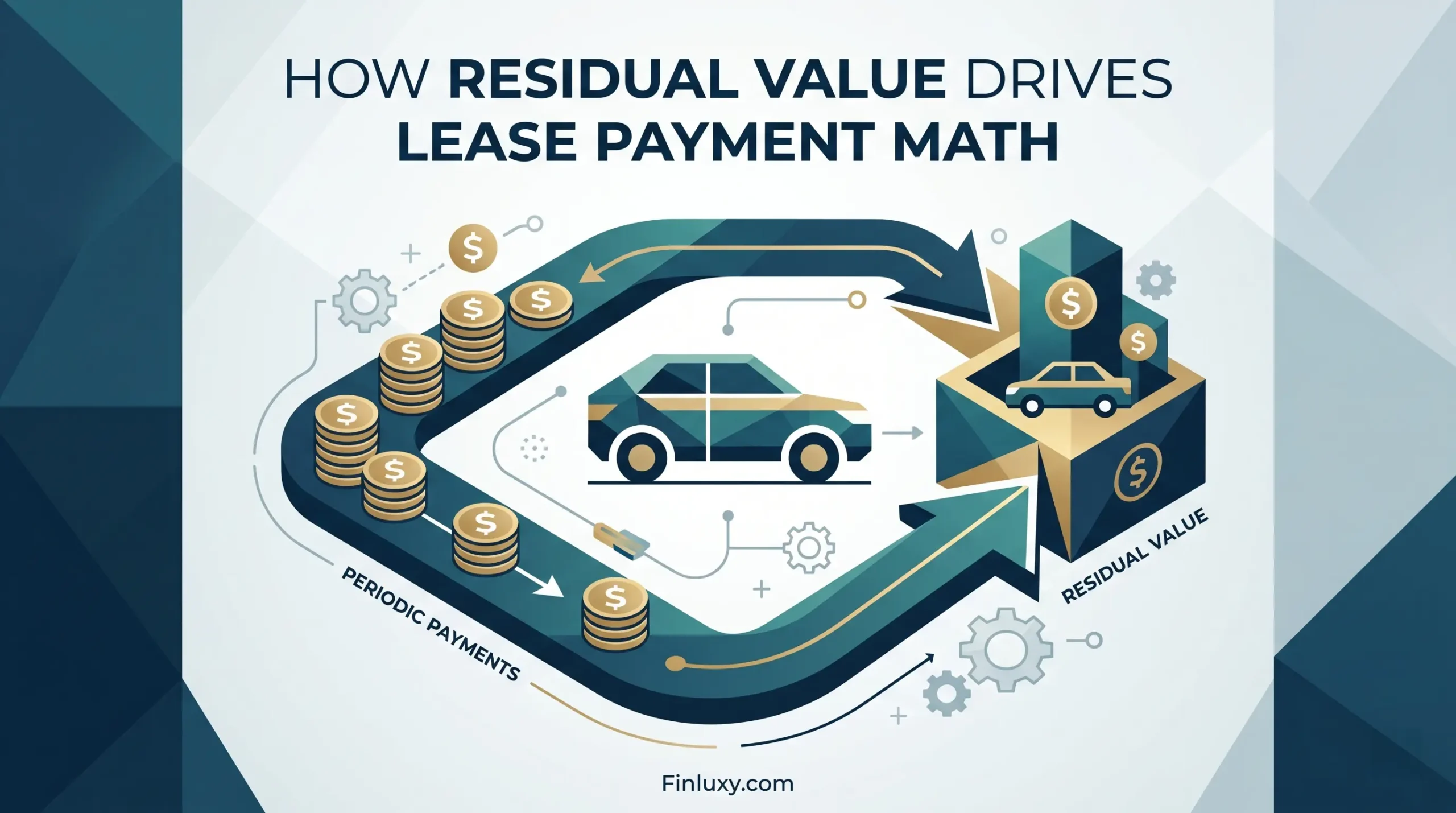
Minimalist geometric vector illustration explaining car lease payment math and residual value concepts, styled for a financial magazine.

How Residual Value Drives Lease Payment Math

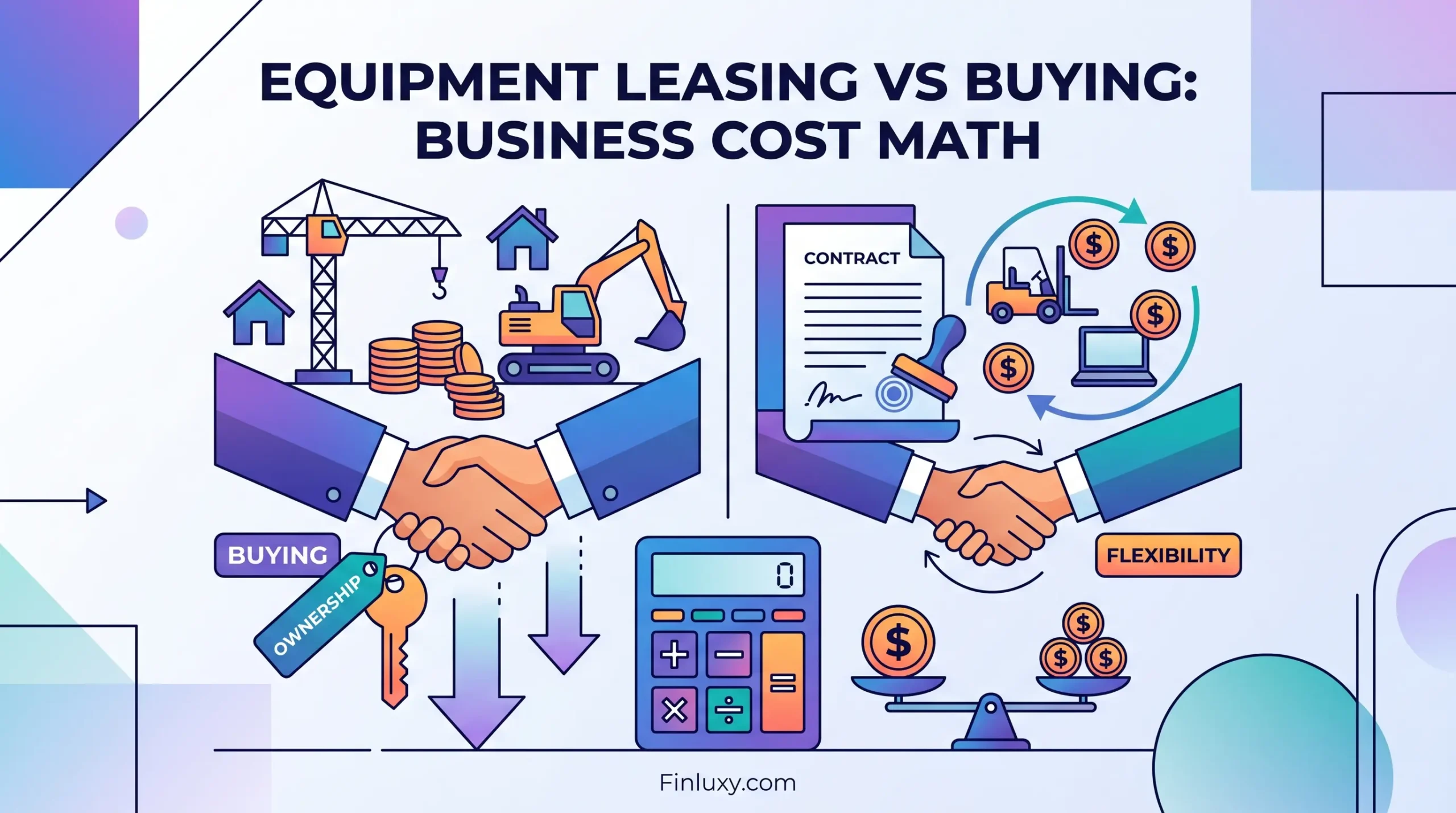
Flat vector illustration comparing equipment buying with a crane to leasing with a contract, including a central calculator.

Equipment Leasing vs Buying: Business Cost Math

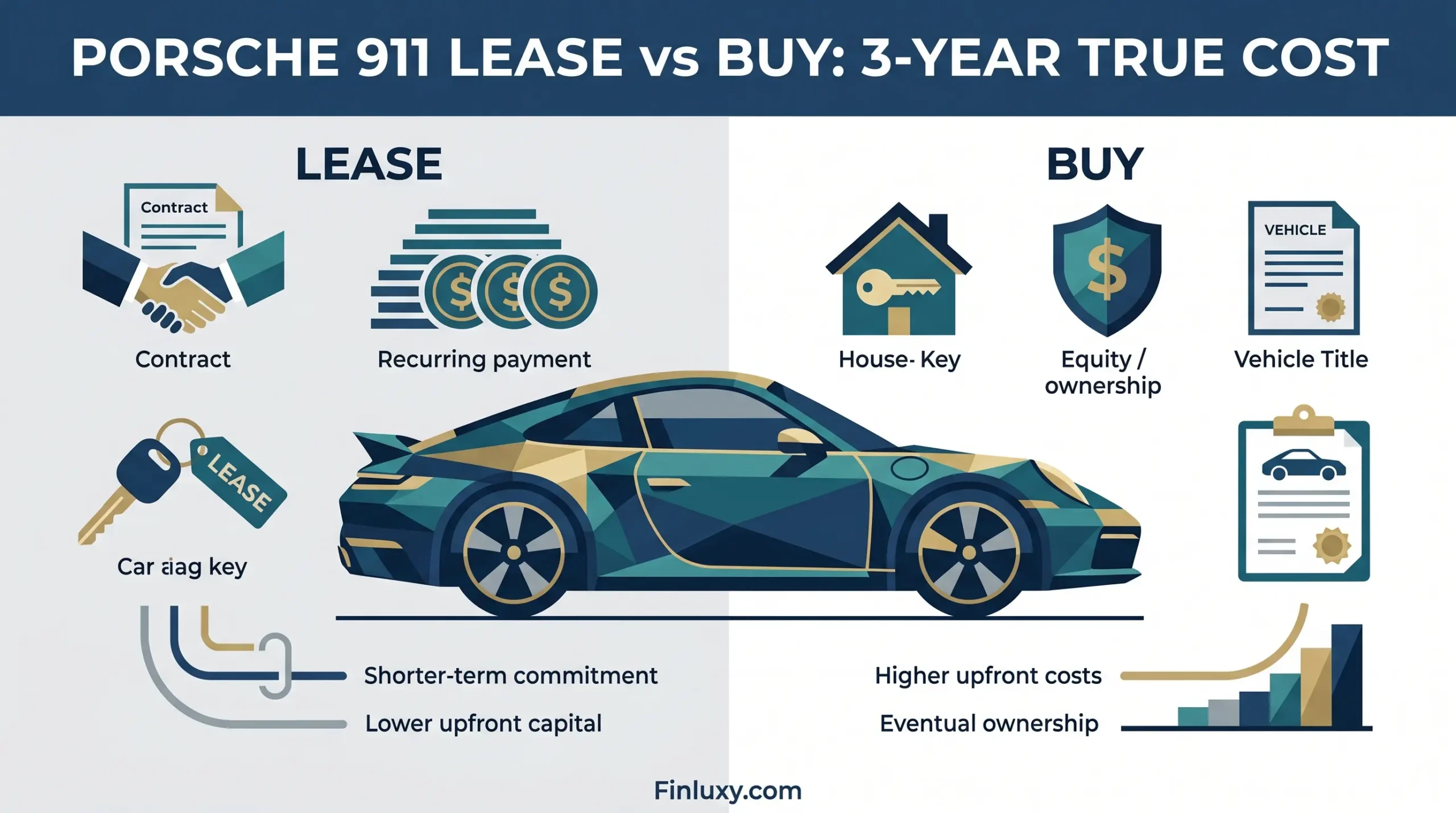
A modern geometric illustration comparing leasing versus buying a Porsche 911, with the headline "Porsche 911 Lease vs Buy."

Porsche 911 Lease vs Buy: 3-Year True Cost

Geometric vector illustration of a car driving toward a spiked pit containing money, surrounded by lease documents.

Mileage Overage Cost: The Lease Trap to Avoid

High mileage drivers pay a steep lease penalty — often $5,000–$12,000 more over 36 months. Here's the math behind why buying almost always wins above 18,000 miles/year.

High Mileage Driver: Why Leasing Is Often Worse

  • About
  • Privacy Policy
  • Editorial Policy
  • Disclaimer
  • Affiliate Disclosure
  • Terms of Use
  • Contact
© 2026 Finluxy. All Rights Reserved.