Resale Value
Resale value is the variable most buyers check last and regret ignoring most. In the luxury market, where individual items can represent tens or hundreds of thousands of dollars, the difference between a purchase that holds value and one that doesn’t can be more financially significant than the initial price gap between options. A $70,000 car with 60% five-year resale retention is a better financial decision than a $60,000 car with 35% retention — the math is straightforward once you run it.
In the automotive segment, Porsche stands apart. The 911, Cayenne, and Macan have consistently ranked at the top of luxury resale studies, with five-year retention rates of 50–65% depending on configuration. Toyota Land Cruiser holds value exceptionally well globally. At the other end, certain European luxury sedans and British SUVs can retain as little as 25–35% of their value after five years. The depreciation curve for each model is mapped in detail in car depreciation.
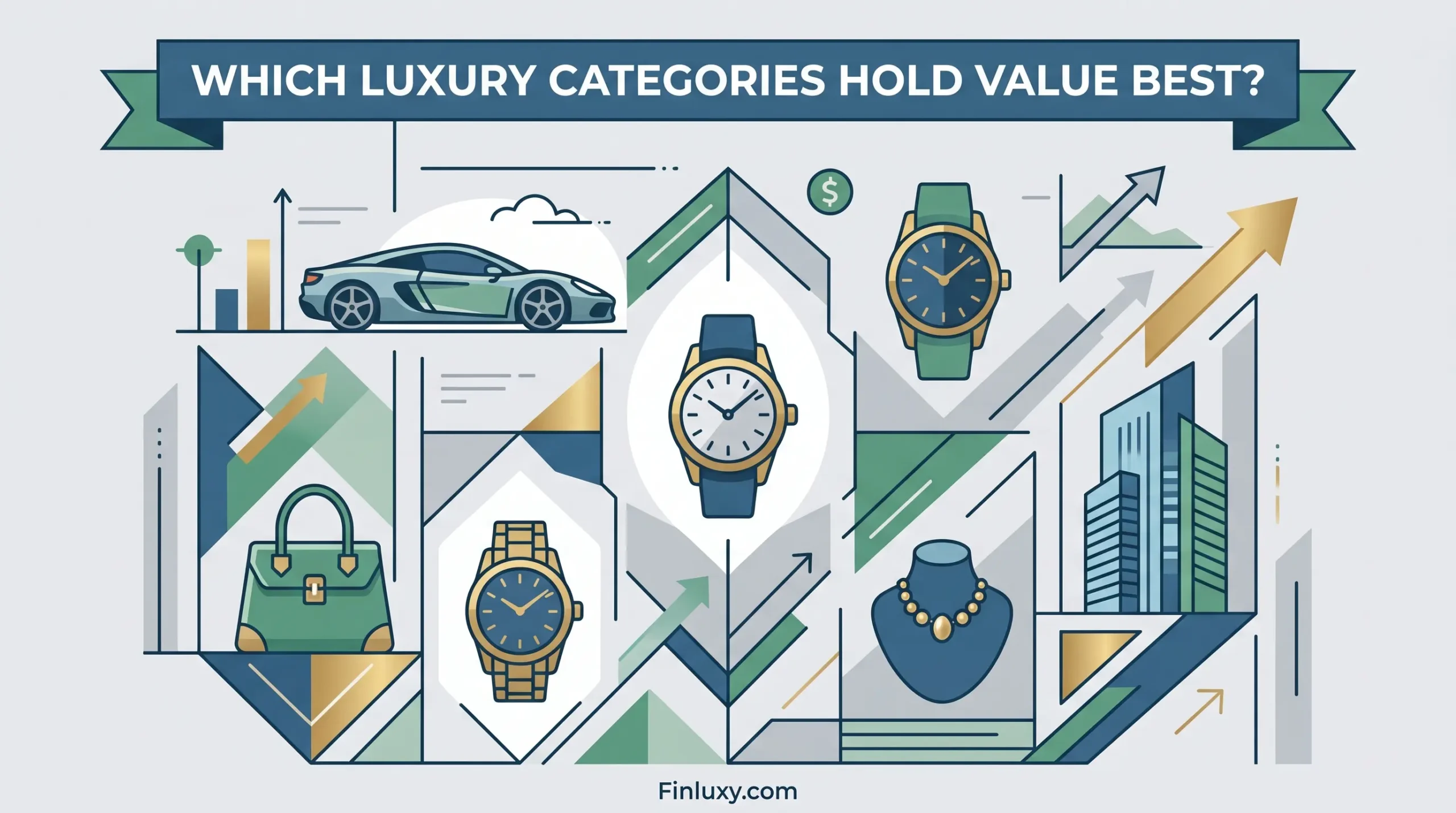
Outside of automotive, secondary market performance varies dramatically by category. Certain Rolex references and Hermès handbags have traded above retail in recent years — a phenomenon covered in more depth in watches & jewelry and designer fashion. Fine wine, coins, and blue-chip art follow collector-market dynamics where condition, provenance, and timing determine outcome, all of which are covered in art & collectibles.
The practical takeaway is that resale value research done before purchase — not after — is what converts a luxury expense into a manageable financial decision. The full cost context lives in the Luxury Spending pillar alongside car ownership and the other categories where the buy-in price is only part of the story.